Team Lead – Portfolio Assessment
Nov 2025 – Mar 2026
AKRSP/PATRIP
Led a mixed-methods, decade-long portfolio assessment of PATRIP-funded infrastructure and tourism interventions in Pakistan’s remote high-altitude border region of Broghil Valley, Chitral. The study examined road connectivity, basic services, livelihoods, and tourism, generating context-specific evidence on access, income diversification, and resilience to inform inclusive and sustainable infrastructure programming.
Team Lead – Endline Study of Advancing Gender Equality through Civil Society (AGECS) Project
Aug 2025 – Oct 2025
AKRSP
Led the mixed methods endline assessment of the Global Affairs Canda funded AGECS project of AKRSP. The study examined implementing partner CSOs’ capacity, women’s leadership, and community responses to gender-based violence in Gilgit-Baltistan and Chitral. Developed practical recommendations to strengthen institutional support systems and sustain progress on gender equality.
Team Lead – Impact Assessment of Community Investment Fund (CIF)
Mar 2025 – Jul 2025
Sindh Rural Support Organisation
Led the impact assessment of CIF interventions focused on financial inclusion, income improvement, and women’s economic empowerment. Managed data collection, analysis, and stakeholder engagement, and provided strategic recommendations for programme refinement.
Proposal Development Consultant
Jun 2025 – Aug 2025
BRAVE Programme (IOM/FCDO Call), TRDP
Developed a submission-ready proposal in response to IOM’s FCDO-funded Building Resilience & Address Vulnerabilities in Emergencies (BRAVE) Programme Call in Pakistan. Reviewed call guidelines, facilitated strategic planning sessions with TRDP teams, and formulated innovative, context-appropriate intervention strategies focused on resilience and emergency preparedness.
Evaluation Support Consultant
Apr 2025 – May 2025
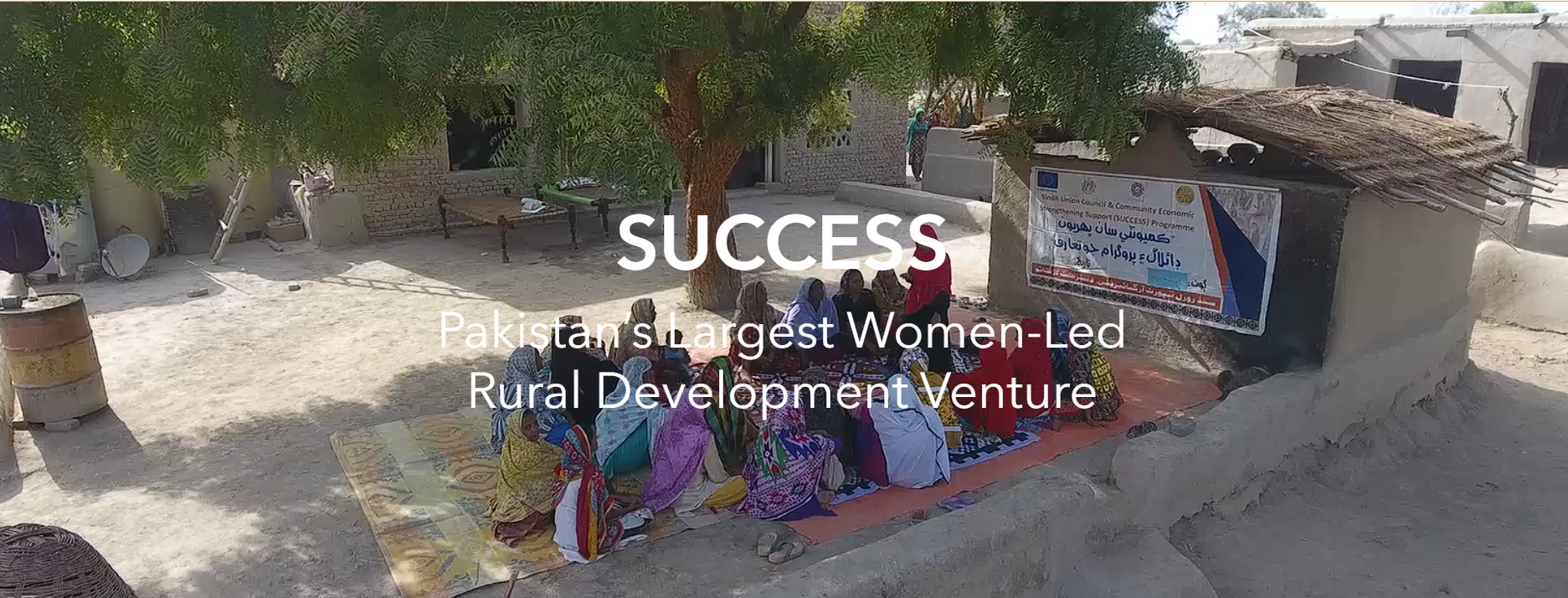
Ex-Post Evaluation of the SUCCESS Programme, RSPN
Supported the EU-funded ex-post evaluation conducted by Oxford Policy Management. Coordinated document submissions, reviewed evaluation deliverables, prepared high-level interview inputs, and ensured timely, quality engagement between RSPN and the evaluation team.
Project Design Consultant
Mar 2025 – Apr 2025
Thardeep Rural Development Programme (TRDP)
Developed a submission-ready concept note under the EU call on gender equality and youth empowerment. Ensured strategic alignment, contextual relevance, and integration of gender, risk, and sustainability components through consultative and evidence-based design.
Team Lead – Endline Impact Evaluation of Accelerated Prosperity (AP Asia)
Dec 2024 – Apr 2025
Aga Khan Foundation (AKF)
Led a four-country impact evaluation on MSME growth and youth entrepreneurship. Designed the evaluation framework, led multinational teams, and synthesised data into strategic recommendations for regional scaling and private sector engagement.
Team Lead – Living Income & Economic Resilience Study,
Dec 2024 – Mar 2025
Better Cotton/HCPL
Assessed income gaps and livelihood vulnerabilities among smallholder cotton farmers. Developed a localised, evidence-based livelihood model and implementation roadmap to enhance economic resilience.
Evaluation Consultant
Aug 2024 – Oct 2024
Christen Blind Mission (CBM) Pakistan/HCPL
Conducted a feasibility study for a disability-inclusive food security and nutrition project. Applied OECD-DAC criteria and participatory approaches to design responsive, inclusive interventions.
Project Design Consultant
Dec 2023 – Jan 2024
Thardeep Rural Development Programme (TRDP)
Prepared two project proposals under EU-UNIDO Micro and Infrastructure Grant Windows, aligned with the Government of Sindh’s Poverty Reduction Strategy, focusing on MSME development and rural infrastructure.
Consultant – Community Economic Development Plan (CEDP)
Nov 2024 – Jan 2025
Association for the Support of the Constitution of the Muslim Shia Imami Ismailis and the Constitutional Entities for the Social Government of the Ismaili Community (A.E.C.C.I.). Portugal
Provided consultancy services for the design of a Community Economic Development Plan (CEDP) under the Centre Office for Poverty Elimination (COPE). Conducted field visits in Pakistan, participated in multi-day community workshops, and youth engagement sessions, and developed a comprehensive plan aligned with the community’s social and economic objectives.
Lead Consultant – Educational Needs Assessment
Nov 2023 – Dec 2023
RSPN/ECW Project
Assessed educational needs of girls and boys including Afghan refugees, returnees, and children with disabilities. Provided actionable recommendations to improve inclusive education access across three districts.
Consultant – Programme Implementation Manual (PIM)
Dec 2022 – Jan 2023
Gwadar Lasbela Livelihood Support Programme (GLLSP), NRSP/IFAD
Developed a comprehensive PIM for consistent implementation of the IFAD-funded GLLSP Balochistan. Reviewed project documentation, engaged with staff, and conducted training sessions to ensure clarity and ownership of procedures.
Evaluation Advisor – Final Evaluation of the Promoting Decent Work Project
Feb 2021 – Apr 2021
Solidarity Centre (DRL-USA)
Designed and led the evaluation of a labour rights project for brick kiln workers. Developed methodology, guided data collection and analysis, and authored the final evaluation report with recommendations.
Consultant – End of Project Evaluation
Dec 2011 – Feb 2012
EC Food Facility Project, AKRSP
Assessed impact of food security interventions, including land, water, seed systems, and livestock. Offered recommendations to enhance targeting, monitoring, and sustainability of rural livelihoods programmes.
Evaluation Expert – Media & Current Affairs Education in Schools
Apr 2010 – Jun 2010
British High Commission, Pakistan
Evaluated impact of media literacy training in public and religious schools. Analysed programme reach, effectiveness, and inclusiveness to inform future education initiatives.
Consultant – Mid-Term Performance Review
Nov 2007 – Mar 2008
Multi-input Earthquake Reconstruction Programme, AKDN, AJK, Pakistan
Reviewed progress of AKDN’s post-earthquake interventions in infrastructure, livelihoods, and socio-economic rehabilitation. Provided strategic recommendations for programme improvement.
Team Leader – Development of Institutional Maturity Index
Nov 2007 – Jan 2008
RSPN (IFAD – NADP & AJKCDP)
Developed an institutional capacity assessment tool and Maturity Index for IFAD-funded projects. Supported community institution benchmarking and strategy development for organisational strengthening.
Market Assessment Specialist and Co-Team Lead
Apr 2026 – Jun 2026
HCPL-WFP MGD School Meals Market Assessment, Sindh Pakistan
Leading the technical design and implementation of the market assessment, including commodity mapping, value-chain analysis, trader/supplier interviews, price and supply-capacity assessment, and procurement-focused recommendations.